
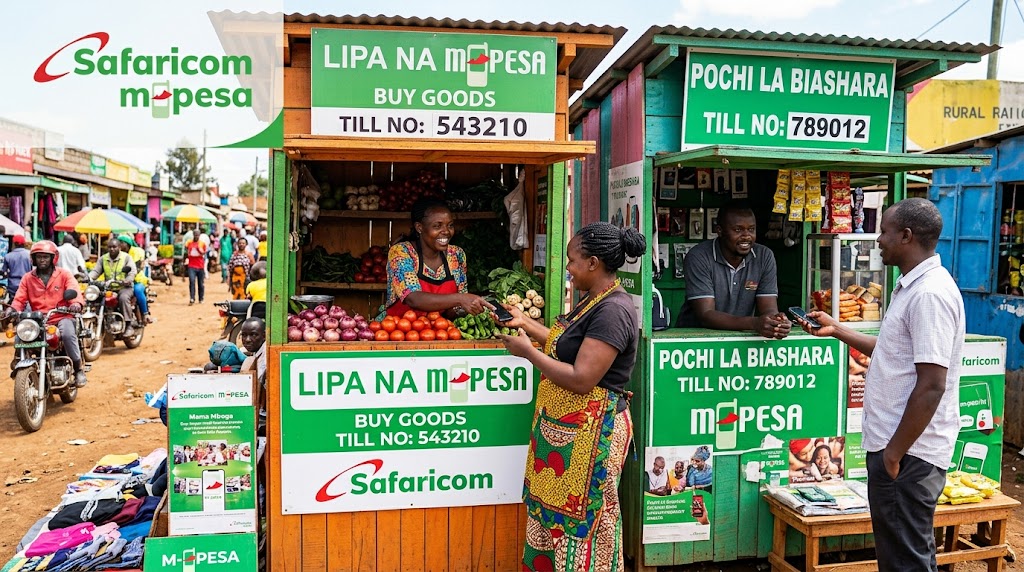
Are you a small business owner in Kenya? Or maybe you use M-Pesa every day to buy groceries and pay bills? We have great news for your wallet!
Safaricom has officially announced major cuts on M-Pesa business charges. The telco giant has reduced transfer fees from business tills by up to 50 percent. At the same time, Safaricom has doubled the free payment limit for shoppers using Lipa na M-Pesa Buy Goods.
These updates come under Safaricom’s new “Pata More” campaign. The changes take effect starting August 2026. They are designed to give Kenyans more value for their money at a time when the cost of living remains high.
In this guide, we break down every single change. We explain what it means for your business, your daily shopping, and your monthly budget.
Why Is Safaricom Lowering M-Pesa Fees Now?
To understand these new changes, we need to look at what is happening in Kenya right now.
First, the Central Bank of Kenya (CBK) introduced new pricing principles for financial service providers. The CBK wants all mobile money platforms to be fair, clear, and cheap for everyday citizens. Safaricom updated its fee structure to line up with these CBK guidelines.
Second, life has been tough for many Kenyan households. In July 2026, Kenya’s annual inflation rate stood at 6.5 percent. Food prices, transport costs, and rent have all gone up. When everyday costs rise, small traders feel the pain first. Customers buy less, and profit margins shrink.
Safaricom plays a huge role in the Kenyan economy. Consider these facts:
- 89.1% Market Share: M-Pesa handles nearly 9 out of every 10 mobile money transactions in Kenya.
- KES 41.68 Trillion: That is the total value of money processed through M-Pesa in the year ending March 2026. This amount is more than double the size of Kenya’s entire economy.
- 83.7% Financial Inclusion: M-Pesa has helped bring formal financial services to over 83 out of 100 adults in Kenya, up from just 26 percent 20 years ago.
Because M-Pesa is so big, any change in fees affects millions of people. Lower fees mean more money stays in the pockets of hard-working Kenyans.
1. Lipa Na M-Pesa Buy Goods: Free Limit Raised to KES 500
If you run a small shop or buy items using Lipa na M-Pesa, this update directly benefits you.
What Has Changed?
Previously, when a customer bought items worth up to KES 200, the merchant paid zero fees. If the purchase was over KES 200, Safaricom charged the trader a transaction fee.
Starting August 7, 2026, the free limit has been doubled from KES 200 to KES 500.
What This Means for Shoppers and Traders
- For Shoppers: You can continue paying for small items without cash. As always, sending money via Buy Goods is completely free for the buyer.
- For Small Retailers: Mama mbogas, kiosk owners, hardware operators, and butcheries get huge relief. Most daily micro-purchases in Kenya fall below KES 500. Under the new rule, merchants pay zero fees on all these transactions.
What Happens for Payments Above KES 500?
For collections above KES 500, the standard charge remains 0.55 percent, with a maximum fee cap of KES 200.
Example:
If a customer pays KES 450 for groceries using Buy Goods:
- Old Fee for Merchant: Charged a fee because it was above KES 200.
- New Fee for Merchant: KES 0 (100% Free).
This simple change saves small shops hundreds of shillings every single week.
2. Major Changes to Pochi La Biashara
Pochi la Biashara is Safaricom’s popular service for informal business owners. It allows traders like boda boda riders, salon owners, and street food vendors to accept business payments directly into a separate wallet without buying a full POS machine.
Safaricom has made two major upgrades to Pochi la Biashara:
- Higher Free Threshold: The zero-fee limit for customer payments to Pochi has been increased from KES 100 to KES 200.
- Special 90-Day Promotional Offer: From August 1, 2026 to October 31, 2026, Safaricom is waiving all charges on customer payments up to KES 200. For payments above KES 200, transaction fees will be capped at a maximum of KES 50.
This 90-day promo gives informal traders a big break during a tough economic quarter. It encourages more customers to pay digitally instead of carrying cash.
3. Up to 50% Off on Moving Business Cash out of Tills
For many business owners, receiving money on a till is only the first step. At the end of the day, you need to transfer that cash to your personal M-Pesa wallet or send it to suppliers via Paybill.
In the past, these transfer fees added up quickly. Safaricom has now slashed these charges by up to 50 percent.
A. Pay to Mobile (Till to Personal M-Pesa Wallet)
When a merchant transfers money from their business till to their personal M-Pesa phone number, the fees have been cut significantly.
| Transaction Amount (KES) | Old Fee (KES) | New Fee (KES) | Savings / Reduction |
| 1 – 100 | Free | Free | 0% (Always Free) |
| 101 – 500 | 7 | 4 | 43% Off |
| 501 – 1,000 | 13 | 7 | 46% Off |
| 1,501 – 2,500 | 33 | 17 | 48.5% Off |
| 15,001 – 20,000 | 105 | 53 | 49.5% Off |
As shown in the table above, large transfers between KES 15,001 and KES 20,000 now cost KES 53 instead of KES 105. That is almost a half-price discount!
B. Pay to Paybill (Till to Supplier or Corporate Account)
Many business owners use their business till balance directly to pay utility bills, pay rent, or clear supplier invoices via Paybill. Charges for this service have also dropped across all tiers.
| Transaction Amount (KES) | Old Fee (KES) | New Fee (KES) |
| 1 – 100 | Free | Free |
| 101 – 500 | 4 | 3 |
| 501 – 1,000 | 12 | 10 |
| 1,501 – 2,500 | 27 | 25 |
| Up to 250,000 | 54 | 52 (Flat Rate) |
By reducing these costs, Safaricom makes it much cheaper for business owners to run their daily cash flow digitally.
4. “Pata More”: Bigger Data Bundles at No Extra Cost
Safaricom did not stop at M-Pesa transaction fees. As part of the Pata More initiative, the company has increased internet bundle sizes across daily, weekly, and monthly packages without raising prices.
Here is what you get for your money starting August 2026:
- KES 20 Daily Bundle: Now gives you 250MB, up from 150MB. That is 100MB more data for the exact same twenty shillings!
- KES 99 Data Bundle: Now gives you 1.5GB, up from 1GB. That is a 50 percent boost in data capacity.
- KES 1,000 Monthly Bundle: Now gives you 21.5GB, up from 10GB. You get more than double the data for the same price!
Whether you use internet for WhatsApp, social media marketing, streaming, or running an online store, these new rates deliver much higher value.
5. Supercharged Home Fibre Internet
If you have Safaricom Home Fibre at your house or office, your internet connection is about to get a major speed boost.
Under the Pata More roll-out, Safaricom is increasing fibre broadband speeds by up to 2.5 times across existing plans.
What does this mean in real life?
- Faster movie and video downloads.
- Smooth video calls on Zoom or Teams without buffering.
- Better connectivity for homes with multiple smartphones, smart TVs, and laptops connected at once.
In addition, Safaricom is introducing bundled smartphone offers that combine new devices with connectivity and device insurance benefits. All these services are being integrated into the revamped My OneApp, giving users a single dashboard to manage M-Pesa, mobile data, home fibre, and customer support.
Practical Examples: How Much Will You Save Every Month?
Let us take two realistic scenarios to see how these tariff cuts work on the ground.
Scenario A: Wanjiku’s Vegetable Kiosk in Nakuru
Wanjiku runs a busy vegetable stall. She handles around 40 customer transactions every day:
- 30 customers pay between KES 100 and KES 450 using Lipa na M-Pesa Buy Goods.
- 10 customers pay over KES 500.
Under the Old Rates:
Wanjiku paid merchant fees on all 30 small transactions because they were above KES 200.
Under the New August 2026 Rates:
All 30 small transactions (under KES 500) are 100% free of merchant fees. Wanjiku keeps 100 percent of her sales revenue. At the end of the month, she saves thousands of shillings in transaction costs.
Scenario B: Juma’s Electronics Shop in Nairobi
Juma sells phone accessories and small electronics. At the end of every day, he transfers KES 18,000 from his business till to his personal M-Pesa account to buy stock for the next morning.
- Old Transfer Cost: KES 105 per day. Over 25 working days, Juma spent KES 2,625 on transfer fees alone.
- New Transfer Cost: KES 53 per day. Over 25 working days, Juma spends KES 1,325.
Result: Juma saves KES 1,300 every single month on transfer charges alone. He can reinvest those savings straight back into buying more stock.
Summary Checklist of the New Changes
Here is a quick summary of what you need to remember:
- Lipa Na M-Pesa Buy Goods: No merchant fee for payments up to KES 500 (previously KES 200).
- Pochi La Biashara: Free for payments up to KES 200 (previously KES 100). Max fee capped at KES 50 during the 90-day promo.
- Till to Personal Wallet: Transfer fees cut by up to 50 percent across most tiers.
- Till to Paybill: Lower fees across all levels, with a flat rate of KES 52 for amounts up to KES 250,000.
- Mobile Data: KES 20 gets 250MB; KES 99 gets 1.5GB; KES 1,000 gets 21.5GB.
- Home Fibre: Speeds boosted up to 2.5 times on existing plans.
Final Thoughts
The August 2026 M-Pesa fee reductions and Pata More data upgrades come at the right time for Kenyan consumers and small business owners. Lowering transaction costs makes digital payments more affordable for everyone. It helps small businesses keep more of their hard-earned money while keeping everyday shoppers connected for less.
Take advantage of these new rates today. Check your M-Pesa app or dial *334# to see the updated tariff menu and start tracking your savings!

