
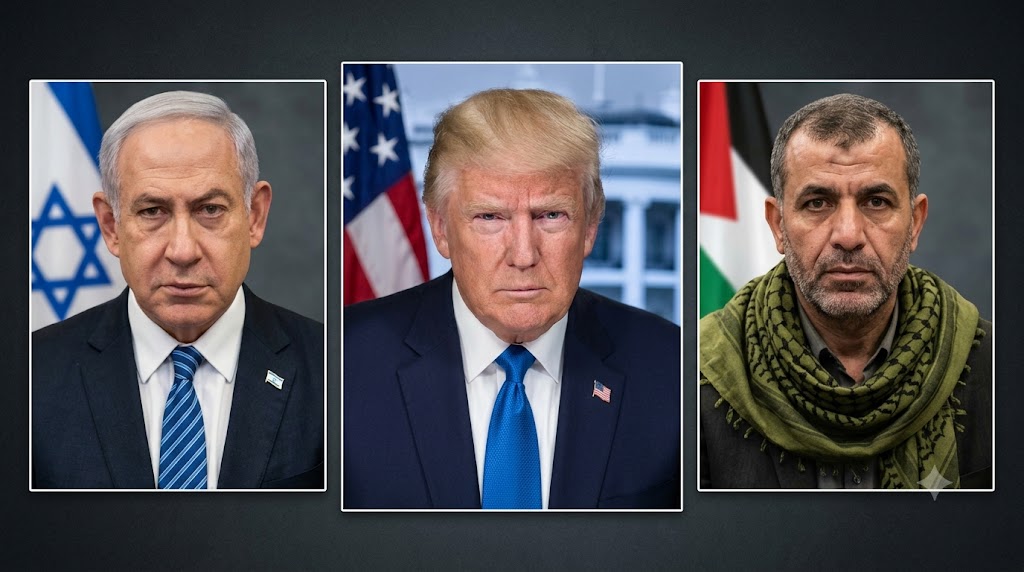
In international diplomacy, few errors are as costly as misjudging leverage. When negotiating a conflict’s resolution, mediator frameworks that rely on outdated assumptions, artificial timelines, or optimistic political compromises frequently falter against hard operational realities. This fundamental miscalculation lies at the heart of current attempts to broker a lasting settlement in Gaza through initiatives like the 15-point plan advanced by President Donald Trump’s “Board of Peace.”
Diplomatic efforts led by Washington and international intermediaries continue to treat the conflict as a balanced stalemate—a situation where both sides can be incentivized to step back through staged concessions and mutual assurances. However, this framework fails to grasp a fundamental reality: Israel is already precisely where it wants to be in Gaza, holding virtually all the tactical and strategic leverage.
Until Hamas, the United States administration, and international negotiators accept that Israel will not trade military control for vague security guarantees, any proposed framework—no matter how elaborate—is destined to remain dead on arrival.
The Reality of Israel’s Leverage: Control on the Ground
Negotiation models assume that prolonged military deployments impose an unsustainable burden on an occupying force, eventually forcing them to compromise. Negotiators working on the Board of Peace initiative appear to operate under the assumption that Israel is eager to end its operational presence in Gaza to reduce political pressure, international criticism, and domestic fatigue.
That assumption misunderates the operational doctrine of the Israel Defense Forces (IDF).
From Jerusalem’s strategic perspective, maintaining a military presence in Gaza is not a crisis to be escaped; it is the fundamental baseline required to protect Israeli national security. Following the atrocities of October 7, Israel’s defense establishment shifted away from containment and deterrence toward total operational freedom of movement.
Today, the IDF maintains control over critical entry points, key transit corridors (such as the Philadelphi and Netzarim corridors), and elevated positions across the Strip. This positioning provides Israel with distinct leverage:
- Tactical Domination: Israeli forces can conduct targeted raids based on real-time intelligence without needing large-scale re-invasions.
- Economic and Supply Control: Israel holds complete oversight over what enters and leaves the territory, neutralizing Hamas’s ability to rebuild its governance or military infrastructure through smuggling.
- Zero Temporal Urgency: The IDF is structurally equipped and doctrine-aligned to maintain its presence in Gaza indefinitely. Time is not working against Israel; it is working against its adversaries.
Israel’s strategic stance is simple: The current status quo is viable. The IDF is prepared to stay in Gaza for as long as necessary to achieve its objectives. Consequently, attempts to pressure Israel using the operational costs of deployment misread its military determination.
Hamas’s Strategic Asymmetry: Why Time Is Not on Their Side
While international negotiators treat Hamas as a party capable of holding out for better terms, the operational reality on the ground tells a very different story.
For Hamas, the continued presence of the IDF is an existential threat. Stripped of its formal military formations, heavy weaponry, and offensive infrastructure, Hamas has been reduced from a pseudo-governmental military force to a fractured insurgency. Each passing week of IDF presence results in further degradation of its remaining underground network, loss of command structures, and depletion of stockpile reserves.
Hamas urgently requires an IDF withdrawal to survive. The group’s leadership understands that as long as Israeli troops occupy strategic high ground and borders, Hamas cannot rebuild its military capability, reassert governance, or secure the flow of illicit arms.
Yet, paradoxically, Hamas negotiators act as if they can demand an Israeli withdrawal without surrendering their weapons. This is the primary disconnect in current negotiations: Hamas needs an end to IDF operations to survive, but it refuses to concede the one condition—full disarmament—that would allow those operations to cease.
The Flaw in Trump’s “Board of Peace” Plan
When President Donald Trump and the Board of Peace unveiled their 15-point plan for Gaza’s post-war reconstruction, it was presented as a pragmatic deal designed to bypass diplomatic stalemate. The proposal promised massive international funding, economic revitalization, and a phased transition of administrative control.
However, Prime Minister Benjamin Netanyahu’s swift and public rejection of the Board of Peace plan underscored the fundamental flaw embedded in the initiative: it prioritizes post-war reconstruction over real, verifiable demilitarization.
Why the Plan Fails
- Equating “De-escalation” with “Disarmament”: The Board of Peace proposal relies heavily on staged withdrawal timelines linked to international monitoring and political pledges. Israeli leadership has repeatedly stressed that “fictitious decomposition” or temporary promises of non-aggression are unacceptable.
- Ignoring the Core Definition of Victory: For Israel, victory in Gaza is defined by a fully demilitarized entity that can never again mount an attack like October 7. A plan that leaves Hamas’s military apparatus partially intact—or defers disarmament to an international committee—allows the group to survive and regroup.
- Misreading Washington-Jerusalem Alignment: While the U.S. administration seeks a swift agreement to stabilize the broader Middle East, Israeli leadership has made it clear that national security interests supersede external diplomatic timelines. Israel appreciates U.S. partnership—particularly regarding regional threats like Iran—but Jerusalem will stand its ground against close allies when fundamental security requirements are compromised.
By treating Israel’s presence as a bargaining chip to be traded for international administration, the Board of Peace plan attempts to construct a post-war architecture on an unviable foundation.
The Non-Negotiable Imperative: Full Disarmament Before Withdrawal
The central point that Hamas, Washington, and international mediators must realize is that Israel will not accept any peace deal, reconstruction framework, or truce that mandates an IDF withdrawal before Hamas is completely disarmed.
From an Israeli defense standpoint, withdrawing prior to full disarmament would recreate the exact security vulnerabilities that existed before the current war. Any agreement that leaves weapons in the hands of Hamas simply sets a countdown timer for the next conflict.
The Real Preconditions for an Israeli Withdrawal
To achieve an agreement that leads to a genuine reduction of IDF forces, negotiations must shift away from demanding Israeli concessions and focus entirely on the logistics of Hamas’s surrender and disarmament:
- Complete Relinquishment of Weapons: Hamas must hand over all heavy weaponry, rockets, manufacturing equipment, and small arms stockpiles under verifiable supervision.
- Dismantling of All Underground Infrastructure: Complete demolition of remaining military tunnels and command bunkers, verified by physical ground inspection.
- Termination of Military Command: Total dismantling of Hamas’s military wing (Al-Qassam Brigades) and the exile or prosecution of its leadership structure.
Unless these conditions are met, Israel has no strategic incentive to vacate its positions. The IDF possesses the military capability, domestic backing, and operational endurance required to maintain its posture in Gaza until Hamas is entirely neutralized as a military entity.
The Path Forward: Realism Over Wishful Thinking
Diplomacy can only succeed when it reflects the actual balance of power on the ground. The current peace initiatives—including the Board of Peace’s 15-point roadmap—are failing because they are built on the false premise that Israel can be persuaded to swap concrete physical security for paper promises.
Israel is in Gaza because its vital security needs demand it, and it will remain there until those security needs are permanently satisfied. Hamas lacks the leverage to demand an Israeli exit while keeping its arsenal, and international mediators lack the authority to guarantee Israel’s defense if Hamas breaks its word.
If Hamas, President Trump, and the Board of Peace truly want to end the conflict and begin the restoration of Gaza, they must abandon the illusion that Israel will compromise on its core security requirements. The roadmap to peace does not begin with an Israeli withdrawal; it begins and ends with the total, irreversible disarmament of Hamas. Until negotiations address that reality, Israel will stay right where it is.

