Fixed-income funds are among the most popular investment choices for Kenyan investors seeking stability, predictable returns, and a relatively lower-risk alternative to equity markets. Yet, despite their popularity, there remains a great deal of confusion about what fixed-income funds actually are, how they work, and whether they are truly “safe.”
This comprehensive guide breaks down everything you need to know — from what fixed-income funds invest in, to their risks, benefits, and how to evaluate whether they belong in your portfolio.
What Exactly Are Fixed-Income Funds?
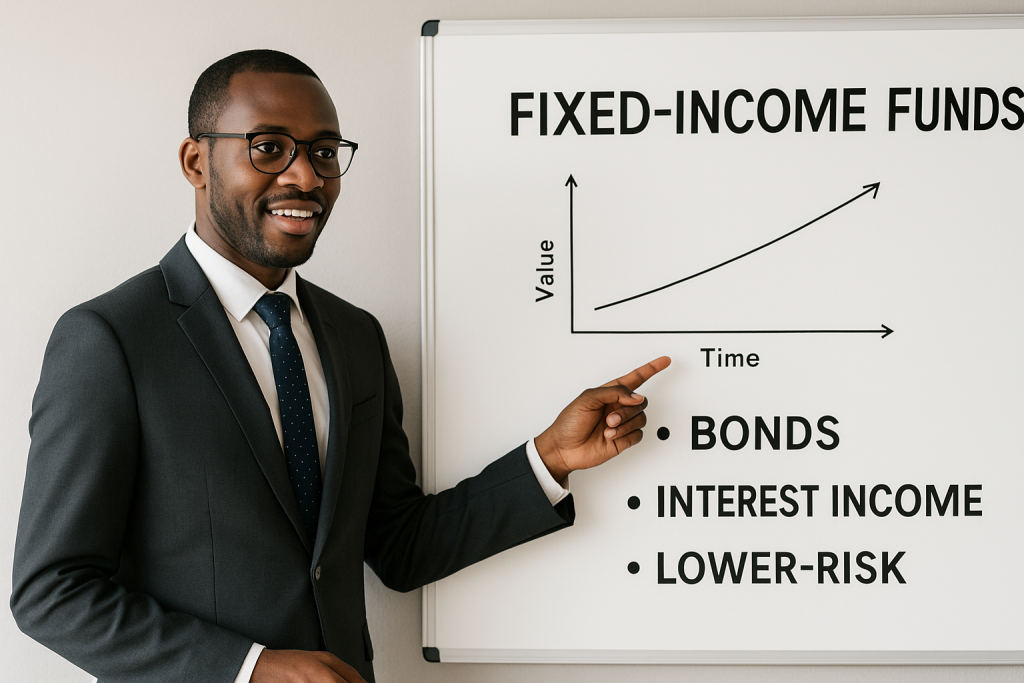
Fixed-income funds are investment funds that pool money from multiple investors and invest it primarily in debt securities. These securities include:
- Government bonds
- Treasury bills
- Corporate bonds
- Commercial paper
- Asset-backed securities
- Other interest-bearing instruments
When you invest in a fixed-income fund, you are indirectly lending money to governments, corporations, or financial institutions. In return, these entities promise to:
- Pay periodic interest (also called coupon payments), and
- Repay the principal when their bonds mature.
The fund manager collects interest from these securities, distributes returns to investors, and actively manages the portfolio to optimize risk and yield.
Why Fixed-Income Funds Are Popular Among Kenyan Investors
Kenyan investors, especially those seeking lower volatility, favor fixed-income funds for several reasons:
1. Stability Over the Short to Medium Term
Fixed-income funds are designed to be more stable than their equity counterparts. Because they focus on interest-paying debt rather than price-volatile stocks, their performance tends to fluctuate less dramatically.
2. Predictable Income
These funds generate steady interest income, which is attractive to investors who need regular cash flow — such as retirees, parents saving for school fees, or anyone building a reliable cash buffer.
3. Ease of Access
Most Kenyan fixed-income funds allow investors to start with modest amounts (some even from as little as Kshs 1,000). This makes them suitable even for first-time investors.
4. Professional Management
Instead of buying individual bonds or treasury bills, investors get access to expert fund managers who diversify the portfolio and rebalance it to minimize risk.
Are Fixed-Income Funds “Safe”?
This is one of the biggest questions Kenyan investors ask.
The answer: Fixed-income funds are generally safer than equity funds — but they are NOT risk-free.
Here’s a deeper look at what makes them relatively safer and where the risks still lie.
Why Fixed-Income Funds Are Considered Low-Risk
1. Debt Instruments Have Defined Obligations
When governments or companies issue bonds, they are legally obligated to make interest payments and repay the principal. This gives fixed-income securities a built-in level of stability.
2. Diversification Reduces Risk
Fixed-income funds typically invest in many different issuers, sectors, and maturities. If one issuer struggles, the overall impact on your investment is cushioned.
3. Short-Term Bonds Are Less Volatile
Many fixed-income funds focus on short-term and medium-term securities. These have lower exposure to interest-rate swings compared to long-term bonds.
4. Government Bonds Are Highly Reliable
A significant portion of Kenyan fixed-income funds is allocated to government bonds and treasury bills, which have a very low chance of default.
But Fixed-Income Funds Still Have Risks
Even though they’re considered lower-risk, fixed-income funds are not “no-risk.” They still face several kinds of risk that investors must understand.
1. Interest Rate Risk
This is the most important risk to understand.
When interest rates rise, the value of existing bonds falls because newer bonds offer higher yields. This decline reduces the Net Asset Value (NAV) of the fund.
Example:
If you buy into a fixed-income fund today and interest rates rise sharply in the next three months, your investment value could fall temporarily.
2. Credit Risk
This is the risk that the bond issuer (especially a corporation) may fail to repay the debt.
While government bonds are typically low-risk, corporate bonds vary in risk depending on financial health and credit rating.
3. Liquidity Risk
Some bonds are not actively traded. If the fund needs to sell such bonds quickly to meet redemptions, it may have to sell them at a lower price, affecting the NAV.
4. Inflation Risk
Fixed-income returns can be eroded by inflation. If a fund yields 9% annually but inflation is 7%, the real return is only 2%.
5. Currency Risk
Some funds invest in foreign-denominated bonds. If the shilling appreciates against those currencies, your returns could drop.
How Fixed-Income Funds Generate Returns
Fixed-income funds provide returns in two major ways:
1. Interest Income
The fund collects coupon payments from its portfolio of bonds and other debt securities. This income is distributed to investors or reinvested, depending on the fund structure.
2. Capital Gains (or Losses)
If a bond is sold for more than its purchase price, the fund makes a capital gain.
If it is sold for less, the fund incurs a capital loss.
The NAV of the fund reflects these movements.
Components of a Fixed-Income Fund Portfolio
A well-managed fixed-income fund typically invests across multiple debt instruments to minimise risk. These may include:
1. Treasury Bills & Bonds (Government Securities)
Issued by the government and considered extremely low-risk.
They typically form the backbone of Kenyan fixed-income funds.
2. Corporate Bonds
Issued by companies to raise funds.
These offer higher yields but also higher credit risk.
3. Commercial Paper
Short-term debt issued by corporations.
Higher yields, but also more sensitive to business conditions.
4. Money Market Instruments
These include treasury bills, bank deposits, and short-term notes.
They enhance liquidity within the fund.
5. Asset-Backed Securities
Some funds invest in bond-like structures backed by pooled assets such as loans or mortgages.
How to Evaluate a Fixed-Income Fund
Here are the key things you must examine before investing.
1. Portfolio Duration
Duration measures how sensitive the fund is to interest-rate changes.
- Short duration → less interest-rate risk
- Long duration → more volatility
Kenyan investors should prefer short-to-medium duration funds in rising interest-rate environments.
2. Credit Quality
A good fixed-income fund should hold mostly investment-grade securities.
Check the percentage of AAA, AA, A, or BBB-rated bonds.
3. Historical Performance
While past performance is not a guarantee of future returns, it shows how the fund performed in challenging environments, especially during periods of rising interest rates.
4. Yield-to-Maturity (YTM)
This gives a realistic estimate of the expected annual return if the fund holds its bonds to maturity.
5. Fees and Charges
High management fees reduce your net return. Always check:
- Management fee
- Custodial fee
- Entry fee
- Exit fee
These charges differ significantly across Kenyan fund managers.
6. Fund Manager Expertise
Choose funds managed by reputable professionals with a track record of conservative risk management and stable returns.
Advantages of Fixed-Income Funds
1. Lower Volatility
Prices of bonds move less than stock prices, making these funds less turbulent.
2. Reliable Income
Bond coupons provide consistent earnings, ideal for income-focused investors.
3. Capital Preservation
Fixed-income funds offer a “buffer” against market downturns, making them useful for protecting wealth.
4. Diversification
They reduce overall portfolio risk when combined with equities.
5. Professional Management
Fund managers actively select bonds, rebalance portfolios, and monitor risk.
Disadvantages of Fixed-Income Funds
1. Lower Returns Compared to Equities
Fixed-income funds offer stability but cannot match long-term equity growth.
2. Vulnerable to Inflation
If inflation rises, real returns decrease.
3. Interest Rate Sensitivity
NAV can drop when interest rates rise.
4. Not Ideal for Long-Term Aggressive Investors
Younger investors seeking rapid wealth growth may find them too conservative.
When Should Kenyan Investors Consider Fixed-Income Funds?
Fixed-income funds may be the right choice when:
- You want stable, predictable returns
- You are saving for a goal that is 1–5 years away
- You are building an emergency or safety fund
- You want to diversify your portfolio’s risk
- You are retired or seeking regular passive income
They may not be ideal if you are aiming for rapid wealth growth and can tolerate short-term volatility.
Fixed-Income Funds vs. Money Market Funds
Although they appear similar, they are fundamentally different.
Money Market Funds
- Invest in very short-term instruments
- Extremely low risk
- Conservative returns
Fixed-Income Funds
- Invest in short, medium, and long-term bonds
- Higher risk than MMFs
- Higher potential returns
Fixed-income funds are better suited for investors who want more yield without taking equity-level risk.
Example: How Returns Can Vary
Assume a fixed-income fund yields 10% annually and inflation is 7%.
Your real return = 3%.
However, if interest rates rise sharply during the year, the NAV may drop even if income remains stable, reducing your total return.
This is why understanding interest-rate cycles is crucial for fixed-income investors.
How Fixed-Income Funds Fit Within a Portfolio
A balanced Kenyan investment portfolio may look like this:
- 40–60% fixed income for stability
- 30–50% equities for growth
- 10–20% cash or money market instruments for liquidity
Fixed-income funds act as an anchor, reducing overall volatility and protecting your capital.
Final Thoughts
Fixed-income funds are a vital investment option for Kenyan investors seeking stability, predictable returns, and lower volatility. While they are not entirely risk-free, they offer a strong balance between security and earnings when managed well.
To succeed with fixed-income funds, you must understand:
- Interest-rate cycles
- Credit risk
- Inflation trends
- Duration and portfolio structure
- Fees and charges
- Your own risk tolerance
A well-selected fixed-income fund can protect your wealth, boost portfolio diversification, and generate reliable passive income — especially in uncertain economic times.
Frequently Asked Questions (FAQs) About Fixed-Income Funds
1. What exactly is a fixed-income fund?
A fixed-income fund is an investment fund that pools money from investors and invests it primarily in debt securities such as government bonds, treasury bills, corporate bonds, commercial paper, and other interest-bearing instruments. These funds aim to generate steady interest income while preserving capital. They are considered less volatile compared to equity funds because they rely on predictable interest payments rather than market price appreciation.
2. Are fixed-income funds safe for Kenyan investors?
Fixed-income funds are generally safer than equity funds because they invest in debt instruments with defined repayment obligations. However, they are not risk-free. They still face interest-rate risk (NAV fluctuations), credit risk (issuer default), liquidity risk, and inflation risk. That said, many Kenyan funds primarily invest in government securities, making them relatively stable.
3. How do fixed-income funds make money?
Fixed-income funds earn returns in two main ways:
- Interest income – The fund receives coupon payments from the bonds it holds.
- Capital gains – When the fund sells a bond at a higher price than it bought it for.
Your overall return is reflected in the fund’s Net Asset Value (NAV) and any income distributions made to unit holders.
4. Can I lose money in a fixed-income fund?
Yes, you can — although losses tend to be smaller compared to equity funds. NAV may fall if:
- Interest rates rise sharply
- A corporate issuer defaults
- The fund is forced to sell illiquid bonds at a discount
- Inflation surpasses the fund’s yield
Losses are possible but typically moderate, especially if the fund invests mostly in government securities.
5. How long should I invest in a fixed-income fund?
Ideally 1 to 5 years, depending on the fund’s structure and your financial goals. Fixed-income funds are not designed for intraday trading or ultra-short holding periods. They work best when you allow interest income and compounding to take effect. Short-term investors (less than 1 year) may prefer money market funds instead.
6. Do fixed-income funds pay monthly interest?
Some do, but not all.
There are two types of fixed-income funds:
- Income funds – Pay out interest regularly (monthly, quarterly, or semi-annually).
- Accumulation funds – Reinvest interest automatically to grow the NAV.
Kenyan investors should confirm the payout policy before investing.
7. How do fixed-income funds compare with money market funds?
Money market funds (MMFs) invest in ultra-short-term instruments and have very low volatility. Fixed-income funds invest in longer-term bonds and corporate debt, which carry more risk but offer higher potential returns.
Use MMFs for short-term savings and fixed-income funds for medium-term goals.
8. What affects the performance of fixed-income funds?
Several factors influence returns, including:
- Central Bank interest-rate decisions
- Inflation trends
- Demand and supply in the bond market
- Credit quality of issuers
- Exchange-rate movements (if foreign bonds are included)
- Portfolio duration (sensitivity to rate changes)
Understanding these factors helps you evaluate when fixed-income funds are likely to outperform other options.
9. Are fixed-income funds suitable during periods of high inflation?
Not always. If inflation is rising faster than bond yields, the real return becomes negative. However, fixed-income funds can still act as stabilizers in a diversified portfolio. They are especially useful for investors prioritizing capital preservation over aggressive growth.
10. Who should invest in fixed-income funds in Kenya?
Fixed-income funds are ideal for:
- Conservative investors
- Retirees seeking steady income
- Individuals saving for medium-term goals
- Investors diversifying away from stocks
- People who want stability in uncertain markets
They may not be suitable for aggressive investors seeking high growth or young investors with long time horizons who can tolerate stock-market volatility.