
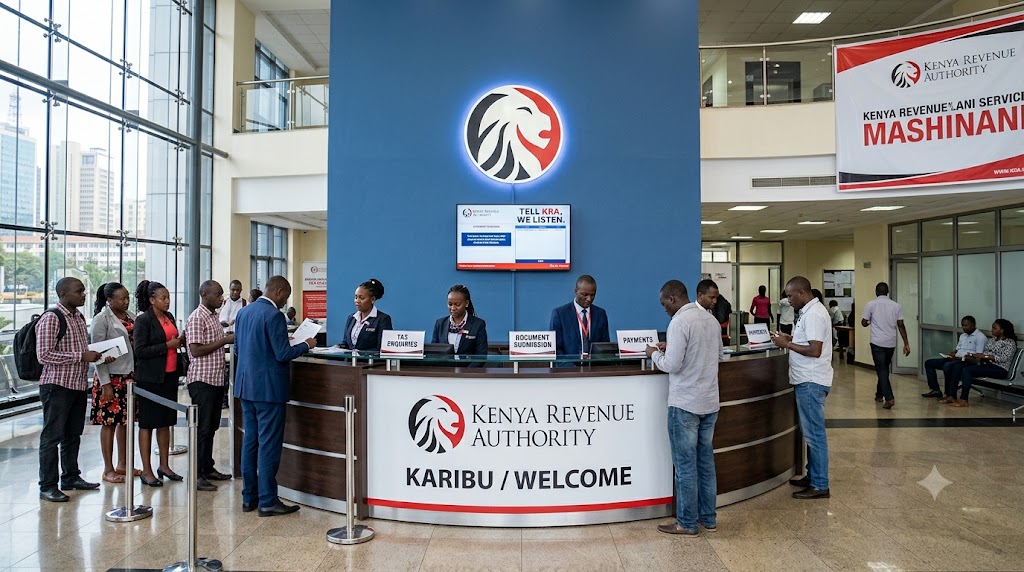
Kenya’s financial sector has taken center stage with two major economic decisions affecting bank loans, interest rates, and tax rules.
The Kenya Bankers Association (KBA) has called on the Central Bank of Kenya (CBK) to keep its key lending rate unchanged at 8.75 percent. At the same time, the Kenya Revenue Authority (KRA) has suffered a major setback after the Tax Appeals Tribunal ruled against it in a Sh264.9 million tax dispute involving Consolidated Bank.
These two decisions directly impact how commercial banks manage money, lend to local businesses, and account for unpaid loans. For everyday Kenyans, the outcomes shape borrowing costs, market stability, and the general state of the economy.
Bankers Want Loan Interest Rates Kept Unchanged
The Kenya Bankers Association has formally urged the Central Bank of Kenya to retain the Central Bank Rate (CBR) at 8.75 percent ahead of the Monetary Policy Committee (MPC) meeting.
The Monetary Policy Committee is the official group inside CBK that sets interest rate benchmarks for the country. When CBK changes this rate, commercial banks adjust their own interest rates on loans and savings accounts.
According to a report by the KBA Centre for Research on Financial Markets and Policy, maintaining the policy rate at 8.75 percent is the safest option for the economy. The lobby group noted that current economic conditions do not call for higher borrowing costs or drastic rate cuts.
Why Bankers Want Rates Held Steady
Bankers point to several economic factors that support keeping interest rates stable:
- Stable Inflation: Price increases for basic household items have stayed within target levels.
- A Steady Shilling: The Kenya Shilling has shown strong performance against major global currencies like the US dollar.
- Resilient Growth: Key economic sectors, including services and manufacturing, continue to show steady progress.
- Credit Flow: Keeping rates predictable helps businesses and individuals plan their borrowing without fear of sudden cost jumps.
Bankers argue that earlier interest rate changes need more time to work through the market. Changing rates too quickly could create unnecessary confusion for borrowers and lenders alike.
How Central Bank Rates Impact Your Wallet
Many ordinary Kenyans wonder how decisions made by the Central Bank affect daily life. The Central Bank Rate serves as the foundation for almost all commercial loan pricing in Kenya.
When the Central Bank lowers the CBR, borrowing becomes cheaper. Commercial banks reduce interest rates on personal loans, mortgages, and business credit lines. This encourages people to borrow money, invest in businesses, and spend more in the local economy.
When the Central Bank raises the rate, borrowing becomes expensive. Banks increase interest rates to control inflation and prevent prices from rising too fast. However, higher interest rates make it harder for small businesses and individuals to repay existing loans or access new credit.
By keeping the rate at 8.75 percent, the central bank helps maintain balance. Borrowers do not face higher monthly loan repayments, and banks can continue offering credit at manageable interest rates.
KRA Suffers Sh264.9 Million Defeat in Tax Tribunal
In a separate but equally significant financial development, the Kenya Revenue Authority lost a tax dispute worth Sh264.9 million against Consolidated Bank.
The case was heard by the Tax Appeals Tribunal, which handles tax-related conflicts between taxpayers and the revenue collector.
The dispute centered on bad debts—loans that borrowers failed to pay back over a long period. Consolidated Bank wrote off these non-performing loans as financial losses and deducted them from its taxable income.
KRA audited the bank’s tax filings and disagreed with the deduction. The tax authority argued that the bank had not fulfilled all legal conditions required to write off the debts. As a result, KRA issued a tax demand for additional payments.
Consolidated Bank challenged KRA’s demand at the tribunal, arguing that it followed all banking regulations and tax laws when classifying and writing off the unpaid loans.
What the Tribunal Decided
The Tax Appeals Tribunal ruled in favor of Consolidated Bank. The tribunal found that the bank acted lawfully when it deducted the bad debts from its income.
Key findings from the ruling included:
- Proper Classification: Consolidated Bank correctly identified the bad debts in line with Central Bank guidelines.
- Exhausted Recovery Efforts: The bank proved it had taken reasonable steps to recover the money from defaulting borrowers before declaring the debts uncollectible.
- Lawful Deductions: Tax laws allow financial institutions to deduct bad debts as legitimate business expenses when calculating taxable profits.
The tribunal canceled KRA’s tax assessment, saving the state-owned lender Sh264.9 million.
Understanding Bad Debts and Bank Taxes
To understand why this court ruling matters, it helps to look at how banks handle bad loans in everyday business.
When a customer takes a loan from a bank to buy land, build a home, or run a business, the bank expects monthly repayments with interest. However, economic hardships, business failures, or job losses sometimes prevent borrowers from paying back the money.
When a loan remains unpaid for a long time, banking rules require the institution to mark it as a non-performing loan. If the money cannot be recovered despite legal demands or selling pledged securities, the bank writes off the debt as a loss.
Under Kenyan tax law, business losses reduce taxable profit. For example:
- If a bank makes Sh1 billion in gross revenue, but loses Sh200 million in bad debts, its taxable profit becomes Sh800 million.
- The bank then pays corporate income tax on the Sh800 million, rather than the full Sh1 billion.
KRA often examines these bad debt write-offs closely during tax audits. The revenue collector wants to ensure that companies do not write off debts prematurely just to lower their tax bills.
The tribunal’s ruling gives commercial banks clear clarity. As long as a lender follows banking regulations and proves that recovery efforts failed, it can deduct bad debts without fear of unfair tax penalties.
What These Decisions Mean for Ordinary Kenyans
Both news items carry important meaning for everyday citizens, small business owners, and loan applicants.
| Financial Topic | Main Recommendation or Ruling | Impact on Mwananchi |
| Central Bank Rate (CBR) | Keep benchmark rate steady at 8.75% | Prevents sudden increases in loan interest rates. |
| Bad Debt Tax Deductions | Tribunal backs bank’s Sh264.9M write-off | Protects bank capital so lenders remain financially sound. |
| Overall Economy | Focus on financial market stability | Supports predictable business planning and steady inflation. |
Predictable Cost of Credit
If the Central Bank follows KBA’s advice and holds rates at 8.75 percent, loan costs will stay predictable. Farmers, traders, and salary earners with active loans will not face higher monthly deductions.
Stronger Banking Sector
When banks can legally deduct real bad debt losses, their balance sheets remain healthy. Healthy banks are better positioned to safeguard customer deposits and continue issuing loans to creditworthy borrowers.
Fairer Tax Enforcement
The tax ruling reminds government agencies that tax collection must strictly follow established laws. Clear tax rules give businesses confidence to invest and operate in Kenya.
Looking Ahead: What to Watch Next
As Kenya’s economy navigates global and local financial conditions, key developments will keep shaping the banking landscape:
- CBK’s Formal Announcement: All eyes remain on the Central Bank’s Monetary Policy Committee as it makes its final decision on the CBR rate.
- KRA’s Next Steps: The tax collector may choose to accept the tribunal’s ruling or appeal the decision in the High Court.
- Private Sector Credit Growth: Borrowers and economic analysts will monitor whether commercial banks expand lending to small and medium enterprises (SMEs) under stable interest rates.
These combined events highlight the delicate balance in Kenya’s financial system—balancing tax collection, bank profitability, and affordable credit for all Kenyans.

